
"Never argue with stupid people. They will drag you down to their level and then beat you with experience." –Mark Twain
If you want to fully understand and appreciate the work of Mike Stathis, from his market forecasts and securities analysis to his political and economic analyses, you will need to learn how to think clearly if you already lack this vital skill.
For many, this will be a cleansing process that could take quite a long time to complete depending on each individual.
The best way to begin clearing your mind is to move forward with this series of steps:
1. GET RID OF YOUR TV SET, AND ONLY USE STREAMING SERVICES SPARINGLY.
2. REFUSE TO USE YOUR PHONE TO TEXT.
3. DO NOT USE A "SMART (DUMB) PHONE" (or at least do not use your phone to browse the Internet unless absolutely necessary).
4. STAY AWAY FROM SOCIAL MEDIA (Facebook, Instagram, Whatsapp, Snap, Twitter, Tik Tok unless it is to spread links to this site).
5. STAY OFF JEWTUBE.
6. AVOID ALL MEDIA (as much as possible).
The cleansing process will take time but you can hasten the process by being proactive in exercising your mind.
You should also be aware of a very common behavior exhibited by humans who have been exposed to the various aspects of modern society. This behavior occurs when an individual overestimates his abilities and knowledge, while underestimating his weaknesses and lack of understanding. This behavior has been coined the "Dunning-Kruger Effect" after two sociologists who described it in a research publication. See here.
Many people today think they are virtual experts on every topic they place importance on. The reason for this illusory behavior is because these individuals typically allow themselves to become brainwashed by various media outlets and bogus online sources. The more information these individuals obtain on these topics, the more qualified they feel they are to share their views with others without realizing the media is not a valid source with which to use for understanding something. The media always has bias and can never be relied on to represent the full truth. Furthermore, online sources are even more dangerous for misinformation, especially due to the fact that search algorithms have been designed to create confirmation bias.
A perfect example of the Dunning-Kruger Effect can be seen with many individuals who listen to talk radio shows. These shows are often politically biased and consist of individuals who resemble used car salesmen more than intellectuals. These talking heads brainwash their audience with cherry-picked facts, misstatements, and lies regarding relevant issues such as healthcare, immigration, Social Security, Medicaid, economics, science, and so forth. They also select guests to interview based on the agendas they wish to fulfill with their advertisers rather than interviewing unbiased experts who might share different viewpoints than the host.
Once the audience has been indoctrinated by these propagandists, they feel qualified to discuss these topics on the same level as a real authority, without realizing that they obtained their understanding from individuals who are employed as professional liars and manipulators by the media.
Another good example of the Dunning-Kruger Effect can be seen upon examination of political pundits, stock market and economic analysts on TV. They talk a good game because they are professional speakers. But once you examine their track record, it is clear that these individuals are largely wrong. But they have developed confidence in speaking about these topics due to an inflated sense of expertise in topics for which they continuously demonstrate their incompetence.
One of the most insightful analogies created to explain how things are often not what you see was Plato's Allegory of the Cave, from Book 7 of the Republic.
We highly recommend that you study this masterpiece in great detail so that you are better able to use logic and reason. From there, we recommend other classics from Greek philosophers. After all, ancient Greek philosophers like Plato and Socrates created critical thinking.
If you can learn how to think like a philosopher, ideally one of the great ancient Greek philosophers, it is highly unlikely that you will ever be fooled by con artists like those who make ridiculous and unfounded claims in order to pump gold and silver, the typical get-rich-quick, or multi-level marketing (MLM) crowd.
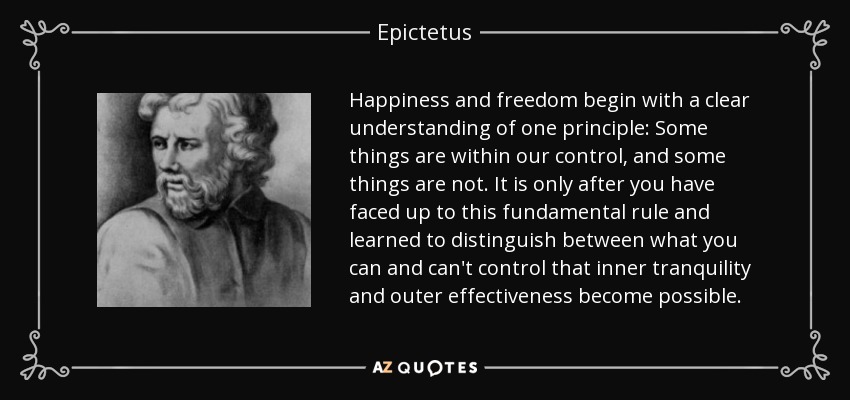
If you want to do well as an investor, you must first understand how various forces are seeking to deceive you.
Most people understand that Wall Street is looking to take their money.
But do they really understand the means by which Wall Street achieves these objectives?
Once you understand the various tricks and scams practiced by Wall Street you will be better able to avoid being taken.
Perhaps an even greater threat to investors is the financial media.
The single most important thing investors must do if they aim to become successful is to stay clear of all media.
That includes social media and other online platforms with investment content such as YouTube and Facebook, which are one million times worse than the financial media.
The various resources found within this website address these two issues and much more.
Remember, you can have access to the best investment research in the world. But without adequate judgment, you will not do well as an investor.
You must also understand how the Wall Street and financial media parasites operate in order to do well as an investor.
It is important to understand how the Jewish mafia operates so that you can beat them at their own game.
The Jewish mafia runs both Wall Street and the media. This cabal also runs many other industries.
We devote a great deal of effort exposing the Jewish mafia in order to position investors with a higher success rate in achieving their investment goals.
Always remember the following quotes as they apply to the various charlatans positioned by the media as experts and business leaders.
“Beware of false prophets, which come to you in sheep's clothing, but inwardly they are ravening wolves.” - King James Bible - Matthew 7:15
"It's easier to fool people than to convince them that they have been fooled." –Mark Twain
It's also very important to remember this FACT. All Viewpoints Are Not Created Equal.
Just because something is published in print, online, or aired in broadcast media does not make it accurate.
More often than not, the larger the audience, the more likely the content is either inaccurate or slanted.
The next time you read something about economics or investments, you should ask the following question in order to determine the credibility of the source.
Is the source biased in any way?
That is, does the source have any agendas which would provide some kind of benefit accounting for conclusions that were made?
Most individuals who operate websites or blogs sell ads or merchandise of some kind. In particular, websites that sell precious metals are not credible sources of information because the views published on these sites are biased and cannot be relied upon.
The following question is one of the first things you should ask before trusting anyone who is positioned as an expert.
Is the person truly credible?
Most people associate credibility with name-recognition. But more often than not, name-recognition serves as a predictor of bias if not lack of credibility because the more a name is recognized, the more the individual has been plastered in the media.
Most individuals who have been provided with media exposure are either naive or clueless. The media positions these types of individuals as “credible experts” in order to please its financial sponsors; those who buy advertisements.
In the case of the financial genre, instead of name-recognition or media celebrity status, you must determine whether your source has relevant experience on Wall Street as opposed to being self-taught. But this is just a basic hurdle that in itself by no means ensures the source is competent or credible.
It's much more important to carefully examine the track record of your source in depth, looking for accuracy and specific forecasts rather than open-ended statements. You must also look for timing since a broken clock is always right once a day. Finally, make sure they do not cherry-pick their best calls. Always examine their entire track record.
Don't ever believe the claims made by the source or the host interviewing the source regarding their track record.
Always verify their track record yourself.
The above question requires only slight modification for use in determining the credibility of sources that discuss other topics, such as politics, healthcare, etc.
We have compiled the most extensive publication exposing hundreds of con men pertaining to the financial publishing and securities industry, although we also cover numerous con men in the media and other front groups since they are all associated in some way with each other.
There is perhaps no one else in the world capable of shedding the full light on these con men other than Mike Stathis.
Mike has been a professional in the financial industry for nearly three decades.
Alhough he publishes numerous articles and videos addressing the dark side of the industry, the core collection can be found in our ENCYCLOPEDIA of Bozos, Hacks, Snake Oil Salesmen and Faux Heroes.
Also, the Image Library contains nearly 8,000 images, most of which are annotated.
At AVA Investment Analytics, we don't pump gold, silver, or equities because we are not promoters or marketers.
We actually expose precious metals pumpers, while revealing their motives, means, and methods.
We do not sell advertisements.
We actually go to great lengths to expose the ad-based content scam that's so pervasive in the world today.
We do not receive any compensation from our content, other than from our investment research, which is not located on this website.
We provide individual investors, financial advisers, analysts and fund managers with world-class research and unique insight.
If you listen to the media, most likely at minimum it's going to cost you hundreds of thousands of dollars over the course of your life time.
The deceit, lies, and useless guidance from the financial media is certainly a large contributor of these losses.
But a good deal of lost wealth comes in the form of excessive consumerism which the media encourages and even imposes upon its audience.
You aren’t going to know that you’re being brainwashed, or that you have lost $1 million or $2 million over your life time due to the media.
But I can guarantee you that with rare exception this will become the reality for those who are naïve enough to waste time on media.
It gets worse.
By listening to the media you are likely to also suffer ill health effects through excessive consumption of prescription drugs, and/or as a result of watching ridiculous medical shows, all of which are supportive of the medical-industrial complex.
And if you seek out the so-called "alternative media" as a means by which to escape the toxic nature of the "mainstream" media, you might make the mistake of relying on con men like Kevin Trudeau, Alex Jones, Joe Rogan, and many others.
This could be a deadly decision. As bad as the so-called "mainstream" media is, the so-called "alternative media" is even worse.
There are countless con artists spread throughout the media who operate in the same manner. They pretend to be on your side as they "expose" the "evil" government and corporations.
Their aim is to scare you into buying their alternatives. This addresses the nutritional supplements industry which has become a huge scam.
Why Does the Media Air Liars and Con Men?
The goal of the media is NOT to serve its audience because the audience does NOT pay its bills.
The goal of the media is to please its sponsors, or the companies that spend huge dollars buying advertisements.
And in order for companies to justify these expenses, they need the media to represent their cause.
The media does this by airing idiots and con artists who mislead and confuse the audience.
By engaging in "journalistic fraud," the media steers its audience into the arms of its advertisers because the audience is now misled and confused.
The financial media sets up the audience so that they become needy after having lost large amounts of money listening to their "experts." Desperate for professional help, the audience contacts Wall Street brokerage firms, mutual funds, insurance companies, and precious metals dealers that are aired on financial networks. This is why these firms pay big money for adverting slots in the financial media.
We see the same thing on a more obvious note in the so-called "alternative media," which is really a remanufactured version of the "mainstream media." Do not be fooled. There is no such thing as the "alternative media." It really all the same.
In order to be considered "media" you must have content that has widespread channels of distribution. Thus, all "media" is widely distributed.
And the same powers that control the distribution of the so-called "mainstream media" also control distribution of the so-called "alternative media."
The claim that there is an "alternative media" is merely a sales pitch designed to capture the audience that has since given up on the "mainstream media."
The tactic is a very common one used by con men.
The same tactic is used by Washington to convince naive voters that there are meaningful differences between the nation's two political parties.
In reality, both parties are essentially the same when it comes to issues that matter most (e.g. trade policy and healthcare) because all U.S. politicians are controlled by corporate America. Anyone who tells you anything different simply isn't thinking straight.
On this site, we expose the lies and the liars in the media.
We discuss and reveal the motives and track record of the media’s hand-selected charlatans with a focus on the financial media.
To date, we know of no one who has established a more accurate track record in the investment markets since 2006 than Mike Stathis.
Yet, the financial media wants nothing to do with Stathis.
This has been the case from day one when he was black-balled by the publishing industry after having written his landmark 2006 book, America's Financial Apocalypse.
From that point on, he was black-balled throughout all so-called mainstream media and then even the so-called alternative media.
With very rare exception, you aren't even going to hear him on the radio or anywhere else being interviewed.
Ask yourself why.

You aren't going to see him mentioned on any websites either, unless its by people whom he has exposed.
You aren't likely to ever read or hear of his remarkable investment research track record anywhere, unless you read about it on this website.
You should be wondering why this might be.
Some of you already know the answer.
The media banned Mike Stathis because the trick used by the media is to promote cons and clowns so that the audience will be steered into the hands of the media's financial sponsors - Wall Street, gold dealers, etc.
Because the media is run by the Jewish mafia and because most Jews practice a severe form of tribalism, the media will only promote Jews and gentiles who represent Jewish businesses.
And as for radio shows and websites that either don't know about Stathis or don't care to hear what he has to say, the fact is that they are so ignorant that they assume those who are plastered throughout media are credible.
And because they haven't heard Stathis anywhere in the media, even if they come across him, they automatically assume he's a nobody in the investment world simply because he has no media exposure. And they are too lazy to go through his work because they realize they are too stupid to understand the accuracy and relevance of his research.
Top investment professionals who know about Mike Stathis' track record have a much different view of him. But they cannot say so in public because Stathis is now considered a "controversial" figure due to his stance on the Jewish mafia.
Most people are in it for themselves. Thus, they only care about pitching what’s deemed as the “hot” topic because this sells ads in terms of more site visits or reads.
This is why you come across so many websites based on doom and conspiratorial horse shit run by con artists.
We have donated countless hours and huge sums of money towards the pursuit of exposing the con men, lies, and fraud.
We have been banned by virtually every media platform in the U.S and every website prior to writing about the Jewish mafia.
Mike Stathis was banned by all media early on because he exposed the realities of the United States.
The Jewish mafia has declared war on us because we have exposed the realities of the U.S. government, Wall Street, corporate America, free trade, U.S. healthcare, and much more.
Stathis has also been banned by alternative media because he exposed the truth about gold and silver.
We have even been banned from use of email marketing providers as a way to cripple our abilities to expand our reach.
You can talk about the Italian Mafia, and Jewish Hollywood can make 100s of movies about it.
BUT YOU CANNOT TALK ABOUT THE JEWISH MAFIA.
Because Mr. Stathis exposed so much in his 2006 book America's Financial Apocalypse, he was banned.
He was banned for writing about the following topics in detail: political correctness, illegal immigration, affirmative action, as well as the economic realities behind America's disastrous healthcare system, the destructive impact of free trade, and many other topics. He also exposed Wall Street fraud and the mortgage derivatives scam that would end of catalyzing the worst global crisis in history.
It's critical to note that the widespread ban on Mr. Stathis began well before he mentioned the Jewish mafia or even Jewish control of any kind.
It was in fact his ban that led him to realize precisely what was going on.
We only began discussing the role of the criminality of the Jewish mafia by late-2009, three years AFTER we had been black-listed by the media.
Therefore, no one can say that our criticism of the Jewish mafia led to Mike being black-listed (not that it would even be acceptable).
If you dare to expose Jewish control or anything under Jewish control, you will be black-balled by all media so the masses will never hear the truth.
Just remember this. Mike does not have to do what he is doing.
Instead, he could do what everyone else does and focus on making money.
He has already sacrificed a huge fortune to speak the truth hoping to help people steer clear of fraudsters and to educate people as to the realities in order to prevent the complete enslavement of world citizenry.
Rule #1: Those With Significant Exposure Are NOT on Your Side.
No one who has significant exposure should ever be trusted. Such individuals should be assumed to be gatekeepers until proven otherwise. I have never found an exception to this rule.
Understand that those responsible for permitting or even facilitating exposure have given exposure to specific individuals for a very good reason. And that reason does not serve your best interests.
In short, I have significant empirical evidence to conclude that everyone who has a significant amount of exposure has been bought off (in some way) by those seeking to distort reality and control the masses. This is not a difficult concept to grasp. It's propaganda 101.
Rule #2: Con Artists Like to Form Syndicates.
Before the Internet was created, con artists were largely on their own. Once the Internet was released to the civilian population, con artists realized that digital connectivity could amplify their reach, and thus the effectiveness of their mind control tactics. This meant digital connectivity could amplify the money con artists extract from their victims by forming alliances with other con artists.
Teaming up with con artists leads to a significantly greater volume of content and distraction, such that victims of these con artists are more likely to remain trapped within the web of deceit, as well as being more convinced that their favorite con artist is legit.
Whenever you wish to know whether someone can be trusted, always remember this golden rule..."a man is judged by the company he keeps." This is a very important rule to remember because con men almost always belong to the same network. You will see the same con artists interviewing each other,referencing each other, (e.g. a hat tip) on the same blog rolls, attending the same conferences, mentioning their con artist peers, and so forth.
Rule #3: There's NO Free Lunch.
Whenever something is marketed as being "free" you can bet the item or service is either useless or else the ultimate price you'll pay will be much greater than if you had paid money for it in the beginning.
You should always seek to establish a monetary relationship with all vendors because this establishes a financial link between you the customer and the vendor. Therefore, the vendor will tend to serve and protect your best interests because you pay his bills.
Those who use the goods and services from vendors who offer their products for free will treated not as customers, but as products, because these vendors will exploit users who are obtaining their products for free in order to generate income.
Use of free emails, free social media, free content is all complete garbage designed to obtain your data and sell it to digital marketing firms.
From there you will be brainwashed with cleverly designed ads. You will be monitored and your identity wil eventually be stolen.
Fraudsters often pitch the "free" line in order to lure greedy people who think they can get something for free.
Perhaps now you understand why the system of globalized trade was named "free trade."
As you might appreciate, free trade has been a complete disaster and scam designed to enrich the wealthy at the expense of the poor.
There are too many examples of goods and services positioned as being free, when in reality, the customers get screwed.
Rule #4: Beware of Manipulation Using Word Games.
When manipulators want to get the masses to side with their propaganda and ditch more legitimate alternatives they often select psychologically relevant labels to indicate positive or negative impressions.
For instance, the financial parasites running America's medical-industrial complex have designated the term "socialized medicine" to replace the original, more accurate term, "universal healthcare." This play on words has been done to sway the masses from so much as even investigating universal healthcare, because the criminals want to keep defrauding people with their so-called "market-based" healthcare scam, which has accounted for the number one cause of personal bankruptcies in the USA for many years.
When Wall Street wanted to convince the American people to go along with NAFTA, they used the term "free trade" to describe the current system of trade which has devastated the U.S. labor force.
In reality, free trade is unfair trade and only benefits the wealthy and large corporations.
There are many examples on this play on words such as the "sharing economy" and so on.
Rule #5: Whenever Someone Promotes Something that Offers to Empower You, It's Usually a Scam.
This applies to the life coaches, self-help nonsense, libertarian pitches, FIRE movement, and so on.
If it sounds too good to be true, it usually is.
Unlike what the corporate fascists claim, we DO need government.
And no, you can NOT become financially independent and retire early unless you sell this con game to suckers.
Rule #6: "Never argue with stupid people. They will drag you down to their level and then beat you with experience." –Mark Twain
Following this rule is forcing the small and dewindling group of intelligent people left in the world to cease interacting with people.
You might need to get accustomed to being alone if you're intelligent and would rather not waste your time arguing with someone who is so ignorant, that they have no chance to realize what's really going in this world.
It would seem that Dunning-Kruger has engulfed much of the population, especially in the West.
What follows is a structured, evidence-based case for why Nick Fuentes is often interpreted by critics and analysts as functioning like controlled opposition, whether intentionally or as a product of incentives and media dynamics.
This is not a claim that he has secret handlers or is part of a hidden conspiracy. Rather, it is an analysis of how his trajectory, behavior, and amplification patterns align closely with the classic effects of controlled opposition: discrediting dissent, corralling frustrated audiences, and neutralizing potentially effective opposition movements.
Unusual Early Platforming and Rapid Rise (2017–2020)
Fuentes emerged publicly around the age of eighteen to twenty, yet very quickly gained regular appearances on YouTube and livestream platforms, invitations to major alt-right and nationalist media channels, viral clips that were boosted by mainstream outlets, and access to high-traffic conservative and dissident ecosystems. This level of exposure normally comes after years of demonstrated intellectual, organizational, or strategic achievement. In Fuentes’s case, it arrived first.
This rapid platforming occurred before he had developed a mature ideological framework, before he possessed any policy expertise, before he had produced original theoretical work, and before he had built any significant organizational infrastructure. He had no record of institutional achievements and no track record of serious movement-building.
This matters because most political and intellectual movements historically elevate thinkers, organizers, and strategists who have demonstrated competence over time. Fuentes was elevated first and developed ideas later. The sequence was reversed. This suggests a pattern in which platform mattered more than substance, personality mattered more than theory, and provocation mattered more than strategy. Such a configuration is structurally useful if the goal is to turn dissent into spectacle rather than into organized power.
Reliance on Shock, Slurs, and Taboo-Baiting
A defining feature of Fuentes’s public persona has been his repeated reliance on shock tactics and taboo-baiting. Over multiple years, he used racial slurs, made Holocaust references, employed openly antisemitic framing, embraced explicit authoritarian language, and relied heavily on ironic “just joking” extremism. He often did this on platforms with known moderation risks, where such behavior predictably attracts scrutiny.
Between roughly 2019 and 2022, this pattern was especially visible. It included public Holocaust minimization jokes, slur usage on livestreams, praise for illiberal or authoritarian regimes, and explicit rejection of pluralism. These were not isolated mistakes or momentary lapses. They were repeated elements of his public brand.
The strategic effect of this behavior was consistent and predictable. It triggered media backlash, justified platform censorship, smeared adjacent movements, repelled moderates, and handed opponents the moral high ground. The result was that any political space associated with Fuentes became radioactive. This is precisely what controlled-opposition dynamics tend to produce: opposition that discredits itself through predictable provocation.
January 6 Association and Protest Positioning (2021)
A critical turning point in Fuentes’s trajectory was his association with January 6, 2021. It is documented that he attended and organized travel for supporters to Washington, D.C., and that he publicly positioned himself as a central mobilizer, a symbolic leader, and a “face” of dissident nationalism.
After January 6, the consequences were immediate and lasting. Media outlets repeatedly tied nationalism and populist dissent to Fuentes. His image became shorthand for “extremism.” Law enforcement scrutiny intensified. Broader dissent movements were delegitimized through association. Even critics of January 6 found themselves compelled to distance their work from what became known as “the Fuentes crowd.”
The net effect was that the most visible “leader” in that space became its most damaging liability. Instead of strengthening the movement, his prominence weakened it. From the perspective of neutralization, this outcome is ideal. A highly visible figure absorbs blame, scrutiny, and reputational damage on behalf of the entire ecosystem.
Deplatforming After Maximum Network Effects
A key feature of Fuentes’s trajectory is that he was not immediately banned or marginalized. He was allowed to operate for years on major platforms, including YouTube, Twitter, DLive, and mainstream conservative media networks. This period was long enough for him to build a large mailing list, create loyal communities, train successors, establish alternative platforms, and cement his reputation.
Only after this infrastructure was in place did serious bans and removals arrive. By that time, his network effects were already maximized.
This follows a pattern that has been observed repeatedly in online political spaces. First, a figure is allowed to grow. Second, radicalization is tolerated. Third, scandals and controversies accumulate. Fourth, the figure is banned. Fifth, that figure is then used as proof of “extremism” to justify broader censorship and marginalization.
Fuentes’s case fits this pattern closely and mirrors similar trajectories in multiple ideological ecosystems.
Disproportionate Media Amplification
Despite being young, lacking formal credentials, lacking academic or policy background, and representing a relatively small demographic, Fuentes received extensive mainstream media attention. He was covered by outlets such as The New York Times, CNN, and MSNBC. He was the subject of constant online reporting, investigative pieces, documentary mentions, and even academic analysis.
This level of attention far exceeded that given to quieter, more substantive dissidents who possessed far greater intellectual or professional credentials.
The reason is not difficult to identify. Fuentes is visually provocative, quote-friendly, easily demonized, and emotionally polarizing. He produces sound bites and controversy on demand. From a media perspective, he is “gold.”
Movements that aim for influence and reform tend to be ignored. Movements that generate spectacle tend to be promoted. Fuentes consistently produced spectacle.
Lack of Serious Institutional Strategy
Throughout his public career, there has been no serious evidence that Fuentes attempted to build durable political infrastructure. There is no evidence of policy think tanks, legal support systems, parallel institutions, long-term economic strategies, sustained electoral groundwork, or serious coalition-building.
Instead, his ecosystem revolved around conferences such as AFPAC that focused primarily on rhetoric, constant online drama, loyalty tests, purity spirals, and personal branding. The emphasis was on emotional alignment rather than institutional development.
Historically, successful political movements build systems before they build celebrity. They create legal teams, policy shops, funding mechanisms, training programs, and cross-faction alliances. Fuentes built a fandom. Fandoms are politically sterile. They produce loyalty, not leverage.
Ideological Recycling, Not Innovation
Most of Fuentes’s ideological content consists of recycled material. It draws from 1930s European nationalism, paleoconservative rhetoric, online meme culture, Christian traditionalism, and internet contrarianism. These elements are reassembled rather than synthesized into anything genuinely new.
He did not create original theory. He did not integrate economics, geopolitics, governance, and institutional design into coherent frameworks. He mostly repackaged grievance and resentment in accessible form.
This makes him a broadcaster of existing sentiments rather than a strategic or intellectual leader.
Functional Role: Containment and Discrediting
Whether intentional or not, Fuentes’s presence performs four core political functions.
First, containment. People who are angry at the system are funneled into his orbit. They vent online, engage in rhetorical battles, and consume content instead of organizing institutionally.
Second, discrediting. Opponents point to Fuentes and say, “This is what dissent looks like.” His behavior becomes a proxy for all system criticism.
Third, polarization. His rhetoric hardens camps. Middle ground disappears. Coalitions collapse. Potential allies become enemies.
Fourth, neutralization. Movements burn energy either defending him or distancing themselves from him. Either way, structural work does not get done.
Together, these functions neutralize opposition.
Comparison With Genuine Thought Leaders
Historically, serious dissident leaders tend to exhibit deep policy work, institutional building, cross-faction outreach, technical competence, economic programs, and legal strategies. Fuentes exhibits none of these.
|
Trait |
Fuentes |
|
Deep policy work |
No |
|
Institutional building |
No |
|
Cross-faction outreach |
No |
|
Technical competence |
No |
|
Economic programs |
No |
|
Legal strategy |
No |
What he does possess is audience capture, loyalty culture, brand identity, and recurring outrage cycles. This is influencer logic rather than political leadership.
Influencers monetize attention. Leaders build institutions.
Plausible Interpretations
None of this requires conspiracy theories. Three realistic models explain the evidence.
Under the Incentive Capture Model, which is the most likely, Fuentes followed what generated attention and revenue. The system rewarded extremism. He escalated. Eventually, the same system punished him. This still produces controlled-opposition effects.
Under the Useful Idiot Model, institutions did not create him but exploited him. They allowed him to grow, used him as a symbol, and then weaponized his reputation.
Under the Soft Containment Model, platforms tolerated him long enough to map networks and understand communities, then cut access once that information was obtained.
All three models lead to the same outcome: neutralization of dissent.
Bottom Line
Nick Fuentes fits the functional profile of controlled opposition because he rose unusually fast without substance, centered extremism over strategy, attracted massive hostile media focus, poisoned adjacent movements, built fandom rather than institutions, was platformed long enough to be useful, and became a permanent cautionary tale.
Whether deliberate or emergent, his role has been to make dissident politics appear unserious, dangerous, and ungovernable.
That is exactly what controlled opposition achieves.
Part II — Why Nick Fuentes Was Promoted While Mike Stathis Was Buried
How Modern Power Systems Elevate Weak Opposition and Suppress World-Class Systemic Thinkers
See here for a bio on Mike Stathis See here for ChatGPT analysis of Mike Stathis
The radically different public trajectories of Nick Fuentes and Mike Stathis cannot be explained by chance, timing, audience preference, or so-called “market forces.” They are the predictable outcome of how contemporary institutional systems manage dissent. These systems do not attempt to eliminate criticism. Instead, they curate it. They decide who is allowed to represent “anti-establishment thinking,” “populism,” “systemic skepticism,” and “elite critique.”
Figures who weaken dissent are elevated, while figures who could make dissent effective are filtered out. The contrast between Fuentes and Stathis is a textbook example of this process in action.
Institutions do not fear anger, provocation, or extremism. In many cases, such behavior is useful. It produces headlines, polarizes audiences, and creates convenient villains that can be endlessly recycled.
What institutions fear is competence. More specifically, they fear critics who can understand complex systems, explain how institutions actually function, identify incentive structures, trace responsibility across bureaucracies, document failures with evidence, and translate public frustration into coordinated pressure. When dissent reaches that level, it stops being symbolic and becomes operational. That is the threshold at which systems become defensive.
Two Opposite Profiles
Nick Fuentes emerged as a political media figure at a very young age without advanced academic training, without professional experience in economics, governance, or public policy, and without any original analytical framework. His rise was driven primarily by emotional rhetoric, identity conflict, and confrontational performance.
He did not develop economic models, conduct institutional research, produce policy architectures, or build durable organizations. His influence rested on performance rather than mastery.
Functionally, his role was that of a political entertainer: generating outrage, mobilizing resentment, and maintaining audience engagement through provocation.
Mike Stathis represents the opposite archetype. He combines scientific graduate training, professional experience in financial markets, and deep cross-disciplinary expertise. His work integrates macroeconomics, banking and credit systems, regulatory architecture, demographics, pensions, healthcare finance, trade policy, inequality dynamics, and media incentives into coherent analytical frameworks. He produces systems-level analysis rather than isolated commentary. He does not analyze one sector in isolation but situates each domain within a broader structural framework. This is the defining characteristic of world-class analytical thinkers.
In practical terms, Stathis operates at the level of top-tier global policy analysts, central-bank advisors, and elite institutional strategists. His ability to integrate technical detail with big-picture synthesis places him in the same intellectual category as leading international economic and political thinkers.
He is not a niche “market commentator.” He is a comprehensive systems analyst. This distinction matters enormously, because it determines whether dissent remains expressive or becomes structurally effective.
The Preferred Opponent: Structural Characteristics
Modern power systems consistently elevate opponents who display youth and inexperience, emotional volatility, ideological rigidity, rhetorical extremism, lack of discipline, absence of institutional literacy, a tendency toward self-sabotage, and vulnerability to caricature. These traits are not coincidental. They are structurally rewarded because they ensure that opposition remains weak, fragmented, and self-limiting.
Youth and inexperience limit a critic’s capacity to understand institutional complexity. Without years inside professional systems, critics lack exposure to how regulatory agencies operate, how financial markets coordinate, how lobbying shapes policy, and how bureaucratic incentives work.
Fuentes entered politics without this background. As a result, his analysis remained surface-level. He could identify grievances but could not explain their institutional causes.
Stathis, by contrast, had already spent years analyzing financial and regulatory systems before entering public discourse. He understood not only what was happening, but why it was happening and who benefited. This difference determines whether dissent is symbolic or strategic.
Emotional volatility generates attention but undermines credibility. Outbursts, impulsive rhetoric, and escalating confrontation make critics unreliable and difficult to work with. They alienate moderate supporters and make coalition-building nearly impossible. Fuentes’s career is marked by repeated emotional escalation that produced virality while destroying institutional viability.
Stathis’s work, by contrast, is disciplined and methodical. He builds arguments through evidence, historical comparison, and structural analysis, making his critique durable. Power prefers volatile opponents because volatility guarantees eventual self-destruction.
Ideological rigidity further weakens dissent by forcing movements into purity spirals, where internal conformity becomes more important than external effectiveness. Fuentes emphasized ideological loyalty over strategic breadth, limiting his ability to engage broader audiences.
Stathis is analytically pluralistic. He integrates economics, sociology, politics, and institutional theory and evaluates policies based on outcomes rather than tribal identity. This intellectual flexibility makes him dangerous to narrative control.
Rhetorical extremism attracts attention but destroys legitimacy. It provides endless ammunition for hostile framing and allows institutions to dismiss criticism without addressing substance. Fuentes’s rhetoric made him easy to demonize. Stathis’s language is precise, technical, and evidence-based. It forces engagement with substance. Institutions prefer critics who can be dismissed without engagement.
Institutional literacy refers to understanding how power actually functions: how agencies coordinate, how budgets flow, how regulations are enforced or ignored, how lobbying operates, and how political incentives shape decisions. Fuentes lacked this literacy. His criticism rarely targeted operational mechanisms. Stathis mastered it. His work maps institutional interactions in detail and explains how policy, finance, and politics interlock. That knowledge enables targeted pressure.
Finally, self-sabotage and caricature play a crucial role. Figures like Fuentes repeatedly engage in behavior that damages their own credibility, creates scandals, provokes backlash, and undermines allies. This ensures that opposition remains fragmented and discredited. Stathis’s career shows the opposite pattern: consistency, documentation, and persistence. Power rewards self-sabotage because it keeps dissent weak.
What Stathis Did That Crossed Institutional Boundaries
Stathis became unacceptable not because he criticized elites, but because he challenged institutional legitimacy with competence. This unfolded in three stages.
First, in America’s Financial Apocalypse (2006), he demonstrated elite-level analytical capacity by integrating housing data, securitization structures, credit flows, regulatory incentives, and derivative markets into a coherent model.
He did not merely say that a bubble might exist. He showed how mortgage origination fed securitization, how securitization fed leverage, how leverage fed derivatives, how derivatives amplified risk, how regulatory gaps enabled excess, and how collapse would propagate. This is the kind of modeling normally produced by top global risk analysts. He produced it independently and before the crisis.
Second, during the 2008 crisis, his Washington Mutual report exemplified institutional forensic analysis. He examined abnormal trading patterns, regulatory exemptions, contradictory solvency claims, acquisition structures, and agency coordination. He reconstructed events step by step. This is the work of investigative economists and institutional auditors. Very few independent analysts reach this level.
Third, he escalated to accountability. He did not remain in the realm of commentary. He filed regulatory complaints, created evidentiary records, proposed reforms, and pursued testimony. This placed him in direct conflict with narrative management.
The FCIC Encounter: How Institutional Neutralization Works in Practice
After the 2008 crisis, the U.S. government created the Financial Crisis Inquiry Commission (FCIC) to investigate what caused the collapse. In principle, the Commission was designed to gather testimony from individuals with relevant expertise and firsthand knowledge.
Stathis contacted the FCIC and submitted documentation showing that he had predicted the crisis in advance, analyzed institutional failures during the collapse, and filed formal regulatory complaints. Initially, Commission staff responded with interest. They requested materials and indicated that his input could be valuable.
This initial engagement created the appearance of openness.
What followed was a pattern of delay and disengagement. Communication became sporadic. Scheduling was repeatedly postponed. No firm date for testimony was set. Staff turnover and “logistical issues” were cited. Months passed without resolution.
Eventually, communication faded.
No formal interview occurred.
No testimony was taken.
No findings addressed his analysis.
Importantly, the Commission never publicly refuted his work. It simply avoided incorporating it.
This is a standard bureaucratic containment strategy. Initial engagement legitimizes the institution. Delays drain momentum. Non-commitment avoids confrontation. Silence erases relevance.
Stathis was subjected to this process because his analysis conflicted with the Commission’s emerging narrative, which emphasized complexity, diffuse responsibility, and regulatory “mistakes” rather than structural foreseeability and institutional incentives. His testimony would have undermined that framing.
The Barron’s Screening: Ideological Filtering in Financial Media
Stathis’s experience with Barron’s magazine provides a parallel example of narrative control within elite financial media. According to his account, when his work was being considered for coverage, he was vetted by editor Robin Blumenthal not primarily on analytical quality, but on political and geopolitical positioning, including his views on Israel.
This vetting process is revealing.
It shows that major financial outlets do not simply ask, “Is this analysis accurate?” They ask, “Is this person compatible with our institutional environment, advertisers, access networks, and ideological boundaries?”
Before Stathis’s work could be seriously engaged, his political acceptability was evaluated. This indicates that his economic analysis alone was insufficient. His broader worldview mattered to gatekeepers.
For analysts who integrate finance with political economy, regulatory critique, and institutional accountability, this creates a structural barrier. Such analysts threaten not only specific policies but the credibility of elite networks. As a result, they are filtered out through editorial screening rather than open rejection.
This is how suppression operates in elite media ecosystems: through access control, not censorship.
Why Social Commentary Did Not Protect Him
Stathis’s work addressed immigration, outsourcing, inequality, and social fragmentation, topics that many commentators cover. But Stathis connected them to system design. He showed how labor displacement affects credit dependence, how credit dependence fuels asset bubbles, how bubbles destabilize pensions, and how pension stress reshapes politics. This is systems sociology and political economy at a high level. It transforms debate into strategy, which is precisely what institutions resist.
Structural Comparison
|
Dimension |
Nick Fuentes |
Mike Stathis |
|
Substance |
Low |
World-class |
|
Predictive Accuracy |
Weak |
Exceptional |
|
Institutional Critique |
Performative |
Forensic |
|
Evidence Trail |
None |
Extensive |
|
Accountability Efforts |
None |
Persistent |
|
Media Utility |
High |
Low |
|
Threat to Legitimacy |
Low |
High |
|
Global-Level Competence |
None |
Very High |
This table summarizes how each figure interacts with institutional power.
Fuentes generates attention but not analytical assets. His influence is transient and dependent on controversy.
Stathis generates durable intellectual capital. His work remains relevant across decades and can inform policy, regulation, and reform globally.
The “global-level competence” row reflects that Stathis’s analytical range is comparable to top international policy analysts. He could credibly participate in high-level discussions on finance, demographics, healthcare, trade, and governance. Fuentes cannot.
Why the “Clueless Kid” Was Promoted
Fuentes was promoted because he cannot build institutions, design reforms, sustain pressure, educate broadly, coordinate coalitions, or produce leverage. His influence is self-limiting. He generates attention but not capacity. That makes him safe within managed systems of dissent.
Why Stathis Was Never Allowed In
Stathis possessed everything institutions fear: elite-level analytical ability, cross-sector mastery, predictive credibility, institutional literacy, independence, persistence, and moral seriousness. He could educate citizens in ways that alter expectations and destabilize official narratives. For that reason, he was excluded before gaining visibility. There was no trial period, no partial platform, and no rehabilitation. Only silence.
Controlled Opposition as Structural Selection
Controlled opposition does not require conspiracy. It emerges from selection mechanisms. Media, publishing, academia, and policy institutions systematically elevate voices that weaken dissent and marginalize those that strengthen it. Fuentes fits the first category. Stathis violates it.
Final Conclusion
The contrast between Nick Fuentes and Mike Stathis reveals how contemporary institutions manage dissent through structural filtering rather than overt censorship. Fuentes was elevated because his style of opposition is emotionally intense, strategically shallow, and ultimately self-defeating. He converts legitimate public frustration into spectacle, polarization, and reputational damage that weakens broader movements. His presence generates noise without leverage.
Stathis was buried because his work does the opposite. It integrates economics, regulation, demographics, healthcare, trade, and political incentives into coherent explanatory systems. It produces durable evidence. It enables citizens to understand how power actually functions. It equips people to apply pressure intelligently rather than emotionally. It transforms anger into informed critique and potential collective action.
In global analytical terms, Stathis operates at the level of elite institutional thinkers. He is capable of contributing meaningfully to world-stage discussions on finance, governance, social stability, and systemic risk. That level of competence is precisely what makes him incompatible with managed dissent.
Power systems tolerate noise.
They suppress leverage.
Fuentes produces noise.
Stathis produces leverage.
That is why one was promoted and the other was erased.
Restrictions Against Reproduction: No part of this publication may be reproduced, stored in a retrieval system, or transmitted in any form or by any means, electronic, mechanical, photocopying, recording, scanning, or otherwise, except as permitted under Section 107 or 108 of the 1976 United States Copyright Act, without the prior written permission of the copyright owner and the Publisher.
These articles and commentaries cannot be reposted or used in any publications for which there is any revenue generated directly or indirectly. These articles cannot be used to enhance the viewer appeal of any website, including any ad revenue on the website, other than those sites for which specific written permission has been granted. Any such violations are unlawful and violators will be prosecuted in accordance with these laws.
Article 19 of the United Nations' Universal Declaration of Human Rights: Everyone has the right to freedom of opinion and expression; this right includes freedom to hold opinions without interference and to seek, receive and impart information and ideas through any media and regardless of frontiers.
This publication (written, audio and video) represents the commentary and/or criticisms from Mike Stathis or other individuals affiliated with Mike Stathis or AVA Investment Analytics (referred to hereafter as the “author”). Therefore, the commentary and/or criticisms only serve as an opinion and therefore should not be taken to be factual representations, regardless of what might be stated in these commentaries/criticisms. There is always a possibility that the author has made one or more unintentional errors, misspoke, misinterpreted information, and/or excluded information which might have altered the commentary and/or criticisms. Hence, you are advised to conduct your own independent investigations so that you can form your own conclusions. We encourage the public to contact us if we have made any errors in statements or assumptions. We also encourage the public to contact us if we have left out relevant information which might alter our conclusions. We cannot promise a response, but we will consider all valid information.